
Ignition cylinder or ignition switch: what each symptom points to
A key that slides in but will not turn is usually the steering lock or worn wafers, and the free checks come first on car key won't turn. A key that turns while the engine does nothing points to the electrical switch behind the cylinder, the starter or the battery, and we say plainly when that belongs with a mechanic.
A cylinder that turns with no key, spins with the key in it, or lets the key out while the engine runs has lost its internal parts. That one needs a new cylinder, not a squirt of lubricant. A key that will not come back out is usually the shifter or the steering lock, covered on key stuck in the ignition.
Why the new cylinder takes your old key
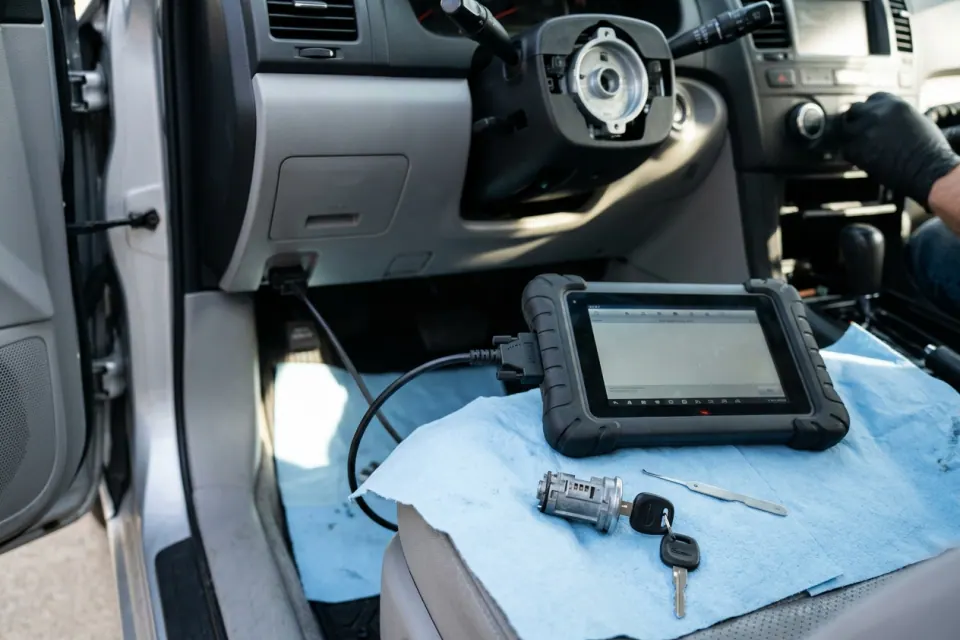
A replacement cylinder can arrive with its own pair of keys. Fit it that way and you carry two keys, one for the doors and one for the ignition, and the new ignition key needs its own chip programmed to the immobilizer, which is key work stacked on ignition work.
We set the new cylinder's wafers to the cuts on the key already in your pocket. Your chip stays in the same key, the car already recognizes it, and on most cars nothing is reprogrammed.
What the dealer does instead
A dealership often replaces the whole lock assembly from the parts counter, and on some cars that assembly comes with its own keys. That is how an ignition bill reaches $350 to $700, and how you can end up with a separate door key unless you also pay to match the door locks. If the car cannot be driven in, the tow adds $125 to $200.